
← Blog·July 30, 2024·Cataract
Choosing the right Intraocular Lens (IOL) for cataract surgery
By Dr. Hemali Doshi
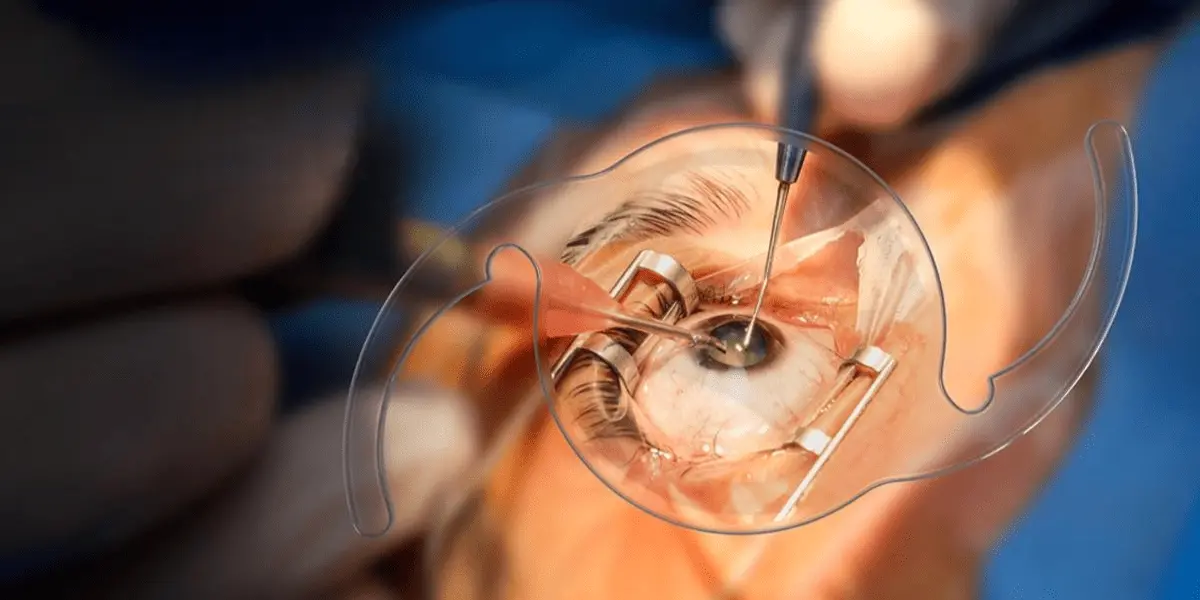
Cataract surgery involves replacing the eye's cataractous lens with an artificial intraocular lens (IOL) to restore clear vision. With advances in technology, several types of IOLs are now available — each designed for different visual needs and lifestyles.
Once your ophthalmologist has evaluated you for surgery, you'll be offered options. This implant will more or less be with you forever, so it's worth making an informed decision. Here's a practical guide to the main IOL categories.
1. Monofocal IOL
The most commonly used lens. A single fixed focal distance — usually set for far vision. (If your ophthalmologist is planning monovision, one eye may instead be set for near.)
Best for: patients with minimal astigmatism who don't mind wearing reading glasses for near tasks.
Pros
- Time-tested — extremely reliable and predictable
- Lower cost; usually covered fully by insurance
- Can be used for monovision (one eye for far, one for near) for spectacle freedom
Cons
- Single focal distance — glasses needed for near work if corrected for distance
2. Multifocal IOL
Concentric rings of different powers allow the eye to focus at multiple distances — far, intermediate and near.
Best for: patients who want to reduce dependence on glasses for both near and far activities.
Pros
- Good vision at multiple distances
- Often eliminates the need for reading glasses
- Improved cosmesis — no bifocals
Cons
- Potential for glare and halos around lights, especially at night (typically settles over time)
- Adjustment period as the brain adapts
- More expensive than monofocals
3. Extended Depth of Focus (EDOF) IOL
EDOF lenses offer a continuous range of vision from far through intermediate distance, with somewhat limited near vision. They use advanced optical designs to extend clear vision without distinct focal points.
Best for: patients who prioritise far and computer-screen distance.
Pros
- Sharp far and intermediate vision
- Fewer visual disturbances (glare/halos) than multifocals
Cons
- May still need glasses for very fine near tasks
- More expensive than monofocals
4. Toric IOL
Toric lenses correct astigmatism — irregular corneal curvature — using different powers along different meridians. They're available in monofocal, multifocal and EDOF designs.
Best for: patients with significant astigmatism (more than 1 D) who want to reduce dependence on glasses for distance vision.
Pros
- Corrects astigmatism while replacing the cataract
- Available across mono, multi and EDOF designs
Cons
- More expensive than standard monofocals
- Requires precise surgical placement — choose a well-trained surgeon
Choosing the right IOL for you
The decision touches a few aspects of your life:
Lifestyle
Are you outdoors and prioritising sharp distance vision? Or do you want to be glasses-free at all costs? Or is your day mostly close-up work — reading, sewing, crafts? Be explicit about your needs with your ophthalmologist so the recommendation fits.
Astigmatism
If you have more than 1 D of astigmatism and want to be spectacle-free for distance, a toric IOL is the right starting point.
Pre-existing conditions
Glaucoma, retinal degeneration and certain corneal conditions can change which IOLs are advisable. Make sure your surgeon has the full picture before any decision.
A thorough evaluation, an honest conversation about your priorities, and the right lens for you — that's the formula. One size never fits all.
The summary
Cataract surgery isn't just about restoring vision — it's an opportunity to improve quality of life. Understanding the available IOLs lets you participate in the decision instead of accepting whatever's offered.
At Arham Eye Care, we work with all the lens types mentioned above. If you'd like to know which one is right for your eyes, message us on WhatsApp or call to book an evaluation.