Services · Cataract
Small-incision, sutureless phacoemulsification done as day-care surgery — you're in, out and home the same day, with a lens chosen for the way you actually live.
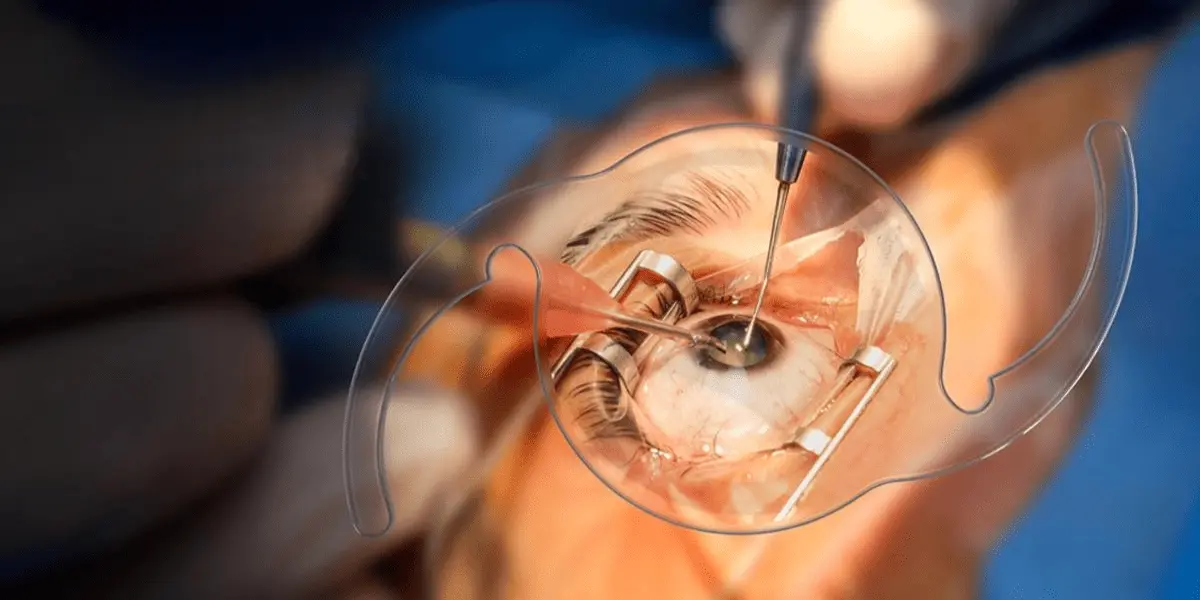
A cataract is a clouding of the eye's natural lens — a normal part of ageing that eventually makes vision hazy, colours dull, and night driving difficult. Glasses stop helping because the problem isn't focus; it's the lens itself.
Surgery is the only effective treatment, and modern surgery is far gentler than most people expect. At Arham Eye Care in Ghatkopar East, we use phacoemulsification: the cloudy lens is broken up with ultrasound and removed through a small, self-sealing incision under anaesthetic drops — no injections, no stitches, no eye patch for weeks. Most patients notice clearer vision within a day or two.
There's no fixed "ripeness" you must wait for. The right time is when the cataract starts interfering with what you want to do — reading, driving, recognising faces, managing glare. At your evaluation we'll grade the cataract, check the rest of the eye (retina, pressure, cornea), and tell you honestly whether surgery now will actually help, or whether it can safely wait.
The artificial lens implanted during surgery stays with you for life, so the choice matters:
| Lens type | What it corrects | Glasses after surgery | Usually suits |
|---|---|---|---|
| Monofocal | Clear vision at one fixed distance (usually far) | Reading glasses usually needed for near work | People who don't mind reading glasses and want a predictable, cost-effective lens |
| Toric | Astigmatism, at the same time as the cataract (available in monofocal, multifocal and EDOF designs) | Depends on the design — a monofocal toric usually still needs reading glasses | People with astigmatism who want it corrected during surgery |
| EDOF (Extended Depth of Focus) | Smooth far-to-intermediate focus (computer, dashboard) | Fewer glasses for daily tasks; reading glasses may be needed for fine print | People who drive and use screens, and want fewer night-time halos than multifocals |
| Multifocal / Trifocal | Clear vision at multiple distances — far, intermediate and near | Designed to reduce or eliminate dependence on glasses | People who want to minimise glasses use, once the evaluation confirms their eyes are suited |
Lens brands available: Indian — Appasamy, Care. Imported — Alcon, Johnson & Johnson (Tecnis), Rayner, Hoya, Zeiss.
We measure your eye with optical biometry and discuss your routine — how much you read, drive, use screens — before recommending a lens. For a deeper comparison, read our guide to choosing the right IOL.
The cost of cataract surgery depends mainly on the lens chosen. Prices are per eye and include the surgeon's fee, the lens, operating theatre charges and follow-up visits.
| Lens category | What it is | Price per eye |
|---|---|---|
| Foldable monofocal | Clear distance vision; reading glasses usually needed | ₹12,000 – ₹20,000 |
| Premium hydrophobic monofocal | Monofocal with a higher-grade lens material | ₹30,000 – ₹50,000 |
| Enhanced monofocal / EDOF | Adds some intermediate range (computer, dashboard) | ₹55,000 – ₹70,000 |
| Toric | Corrects astigmatism during the cataract surgery | ₹45,000 – ₹85,000 |
| Multifocal / trifocal / EDOF toric | Far, intermediate and near vision, with or without astigmatism correction | ₹60,000 – ₹1,10,000 |
Not included: pre-operative tests and eye measurements are charged separately.
The exact price within each range depends on the lens and your eye findings.
EMI options are available. Ask the clinic about monthly instalments.
If you plan to claim the surgery under your mediclaim (health insurance) policy, the clinic helps you with the paperwork for the reimbursement claim.
Cataract surgery is done on-site as day-care surgery, in the clinic's own full-fledged operating theatre with a phaco machine and operating microscope. Dr. Hemali Doshi also operates at Zynova Shalby Hospital, Ghatkopar West.
Why Arham Eye Care
Dr. Hemali Doshi — MS Ophthalmology (Gold Medalist), FPRS fellowship at Nethradhama, Bangalore under Dr. Sri Ganesh. 10+ years, 5,000+ surgeries. Full profile.
Detailed on-site diagnostics before any surgical recommendation. We won't suggest a procedure your eyes can't safely take — often the answer is not surgery.
Modular operation theatre with modern surgical platforms, minutes from Ghatkopar station. Most patients are home the same day.
Common questions
The procedure itself takes about 15–20 minutes per eye, done under anaesthetic drops. With preparation and recovery time you're typically at the clinic for a few hours, and home the same day.
Look for things you can check: an MS in Ophthalmology and specific training in cataract (phaco) surgery, a valid Maharashtra Medical Council registration, the surgeon's surgical experience, full pre-operative measurements (biometry) before a lens is chosen, a clear explanation of lens options, and whether the doctor who examines you is the one who operates. For reference, Dr. Hemali Doshi holds an MS in Ophthalmology with a Gold Medal (2019) from Government Medical College, Surat, an FPRS fellowship in phacoemulsification & refractive surgery (2022) from Nethradhama Superspeciality Eye Hospital, Bangalore, MMC registration no. 2020/12/6851, and has performed 5,000+ eye surgeries. She examines and operates on her own patients. Full profile.
Cataract surgery at Arham Eye Care costs from ₹12,000 to ₹1,10,000 per eye, depending on the lens: about ₹12,000–20,000 for a foldable monofocal and up to ₹60,000–1,10,000 for multifocal, trifocal or EDOF toric lenses. The price includes the surgeon's fee, lens, operating theatre charges and follow-up visits; pre-operative tests are charged separately. EMI options are available. See the price table.
Yes. If you are claiming the surgery under your mediclaim (health insurance) policy, the clinic helps you with the paperwork for the reimbursement claim.
Yes. The clinic is in Pant Nagar itself — B502, Aaradhya Square, Naidu Colony, Jain Temple Road, Pant Nagar, Ghatkopar East, Mumbai 400075 (above Jain Upashraya, next to Aaradhya One Earth) — and Garodia Nagar is also in Ghatkopar East. Cataract surgery is done on-site as day-care surgery in the clinic's own operating theatre.
From Vikhroli station it is about 12 minutes by auto; from Govandi, about 15–20 minutes by auto. Ask for Jain Temple Road, Pant Nagar, Ghatkopar East — the clinic is above Jain Upashraya, next to Aaradhya One Earth. Parking and a lift are available, and the clinic is wheelchair accessible.
It depends on the lens you choose. With a monofocal IOL you'll usually need reading glasses; multifocal and EDOF lenses are designed to reduce or eliminate dependence on glasses. We'll discuss what fits your routine before surgery.
Usually yes, for a while — a cataract is not an emergency in most cases. But very advanced cataracts get harder to remove safely, and poor vision affects daily life and increases fall risk. An evaluation tells you how much room you have.
Typically the two eyes are done a short interval apart, so the first eye can settle and you're never without functional vision. We'll plan the schedule with you.
